EPCIS
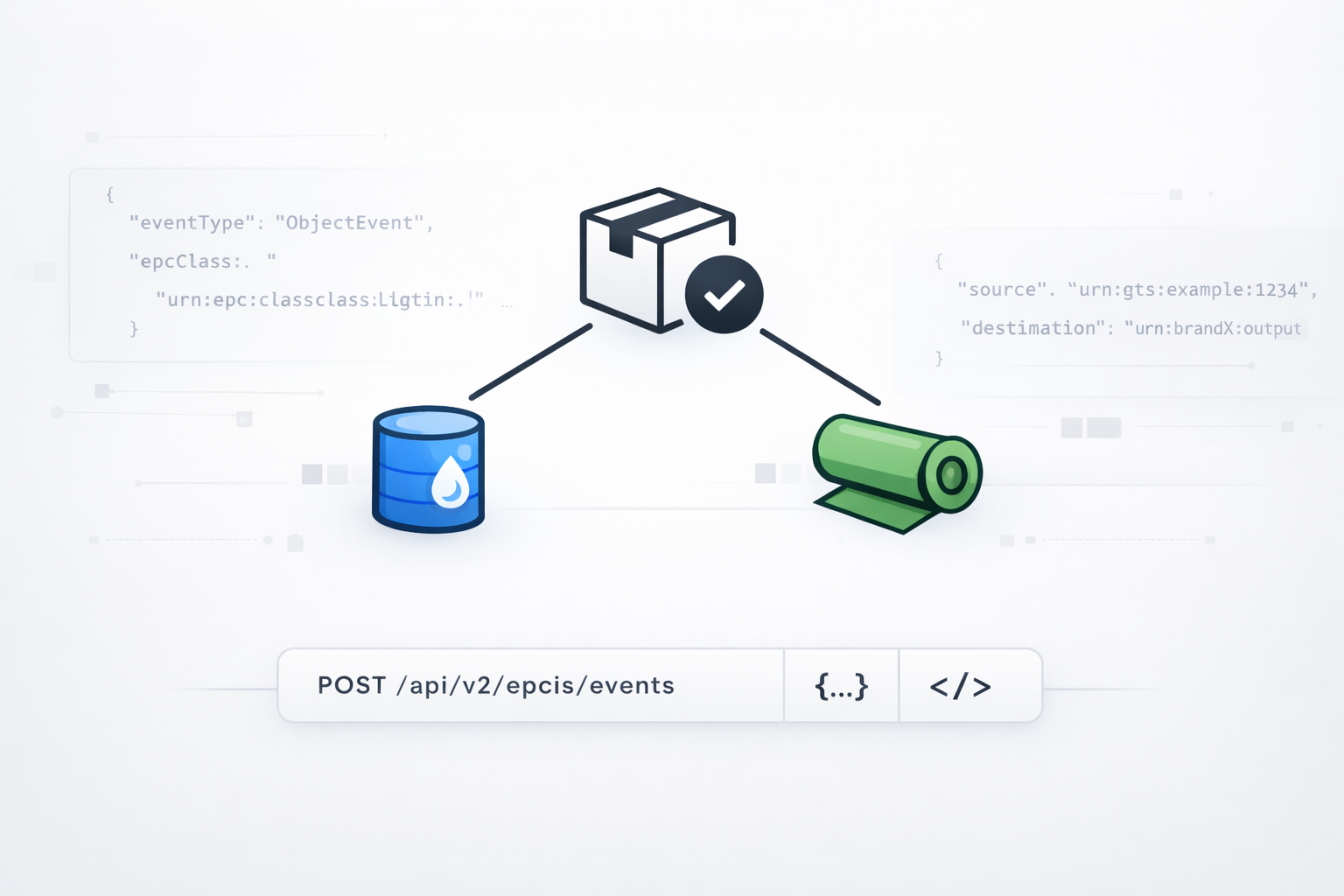
EPCIS Capture & Genealogy Queries (With SAP-Friendly Examples). A practical EPCIS 2.0 walkthrough showing how to capture ObjectEvents and TransformationEvents (using GS1 LGTIN or custom identifiers) and query an upstream genealogy graph (nodes + edges). Built for teams mapping ERP/MES events (including SAP) into EPCIS.
We’ve published a new developer guide to help implementation teams capture EPCIS events and query genealogy graphs end-to-end.
This guide includes:
- Event capture examples (EPCIS 2.0 JSON-LD) using the GS1 EPCIS context
- ObjectEvent examples using both:
- GS1 LGTIN (
urn:epc:class:lgtin:…) - Custom brand identifiers (example
urn:brandX:…)
- GS1 LGTIN (
- A TransformationEvent example that links input materials to output product batches
- A genealogy query example that returns a graph structure of nodes + edges for upstream traceability
Why it matters:
Implementations often start with “capture events,” but the real value comes when you can reliably link inputs → outputs and then query upstream lineage for compliance, DPP readiness, and supply chain visibility. This guide is designed to be copy/paste-friendly for solution integrators and brand technical teams—especially those mapping ERP signals (like SAP events) into EPCIS.